Why Your Blood Pressure Climbs in Winter
Plenty of people in Ludhiana notice their BP readings creeping up once the cold sets in, even though their medicines and routine have not changed. They are not imagining it.
Blood pressure tends to run higher in winter. Part of that is the weather, and part of it is how we live in these months.
What the cold does to your blood vessels
When the body feels cold, the small blood vessels in the skin tighten to hold on to heat. Narrower vessels mean the heart has to push harder, and the pressure inside them goes up. The body also releases more stress hormones in the cold, which nudge both pulse and pressure higher.
Studies from many countries show the same pattern: average readings are several points higher in winter than in summer. Heart attacks and strokes are also more common in the cold months, especially in the early morning hours, when blood pressure naturally rises after waking.
The winter habits that add to it
The weather is only half the story. The other half sits on our plates and in our calendars.
- Wedding and festival season. Fried snacks, achaar, namkeen, sweets, late nights and often alcohol, several times a week.
- More salt than we realise. The World Health Organization advises less than 5 grams of salt a day, about one level teaspoon in total. Pickles, papad, packaged snacks and restaurant food can cross that before dinner.
- Less walking. Fog and cold keep people indoors, and the morning walk is the first thing to go.
- Cold and flu medicines. Some decongestants in cold tablets and syrups can raise blood pressure. Painkillers such as ibuprofen and diclofenac can too, and they are hard on the kidneys.
- A few extra kilos. Weight gained over the winter adds to the load on the heart.
Checking BP at home the right way
A home reading is only useful if it is taken properly. A rushed reading after climbing the stairs tells you very little.
- Sit quietly for 5 minutes first, back supported, feet flat on the floor.
- Rest your arm on a table so the cuff is at the level of your heart.
- No tea, coffee, smoking or exercise in the 30 minutes before.
- Empty your bladder first.
- Use an upper arm machine with the right cuff size. Wrist machines are less reliable.
- Take two readings, one minute apart, in the morning before medicines and breakfast, and again in the evening.
- Do this for 7 days before your doctor’s visit and write the numbers down.
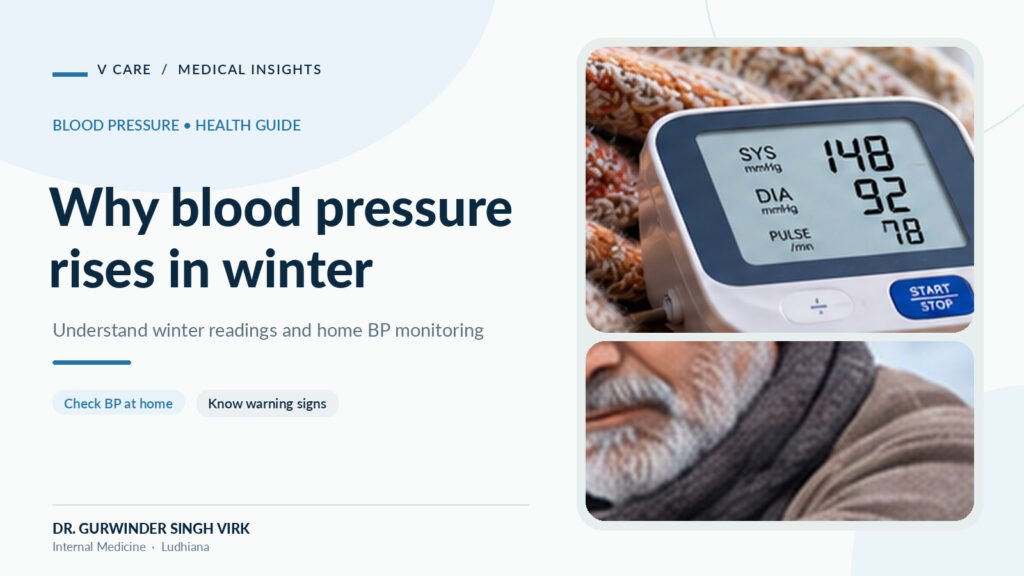
An average home reading of 135/85 or higher is generally treated as high.
Do not adjust your medicines on your own
Some people need a change in dose during winter. Others do not. A few need the reverse in peak summer. What matters is the pattern over days, not a single reading.
Do not stop your tablets because one reading came out normal, and do not double up because one came out high. Bring your written readings to your doctor and let the dose be decided from those.
When high BP is an emergency
Call 108 or go to the nearest emergency straight away if a reading is 180/120 or higher along with any of these:
- Chest pain or pressure
- Breathlessness
- Severe headache, confusion or blurred vision
- Weakness or numbness on one side of the body, a drooping face, or trouble speaking
If the reading is that high but you feel fine, sit quietly for 5 minutes and check again. If it is still that high, speak to your doctor the same day.
Small things that make a real difference this winter
- Keep warm, especially early in the morning. A cap, socks and layers help more than people think.
- Move your walk to late morning or the afternoon sun instead of the coldest hour at dawn.
- At weddings, take one plate and skip the extra achaar and papad.
- Keep alcohol to a minimum.
- Take your medicines at the same time every day. A phone reminder helps.
- If you have diabetes, kidney disease or heart disease, check your BP more often in winter
Common questions
Is 140/90 high blood pressure? In India, clinic readings of 140/90 or above on more than one occasion are generally diagnosed as high blood pressure. Some people with diabetes or kidney disease are treated to lower targets, so ask your doctor what your target is.
Can stress alone raise my BP? Stress can push readings up for a while. If your readings stay high over days, it needs to be checked properly rather than put down to stress.
When to see a doctor
If your readings have been higher this winter, or you have never had your BP checked properly, it is worth a visit. Dr. Gurwinder Singh Virk, Senior Consultant in Internal Medicine in Ludhiana, manages high blood pressure along with the conditions that often travel with it, such as diabetes, cholesterol and kidney problems. Regular preventive check-ups catch rising BP before it causes damage. You can book a consultation here.
This article is for general information and does not replace a consultation with your doctor.